
 Last week I had lunch with a member of the leadership team of an e-commerce company I am advising. I love these lunches for I get to hear about the challenges, provide a point of view, suggest an action plan, but I’m not responsible to drive the implementation. Sigh, it’s a nice change for I’ve spent many years driving and it’s nice not to have to provide a well thought out plan and sell it to all the stakeholders.
The company is struggling with many of the problems common to an early stage start up. Nothing really all that unique. One challenge, however, points to how important it is to address early or it festers like Uncle Fester and can pave the way to a visit with Morticia Addams. The challenge focuses on building a product that customers want.
Back in the mid to late 1990s the concept of “build it and they will come” spread across product innovation. Speaking from the days of the early Internet, I remember talking with companies who received funding based on an online product with the PROMISE that millions of consumers were on their way within a few quarters. WRONG. During my time at eBay, the product team had to take a very pragmatic test and learn approach to innovation for fear of disrupting how consumers buy and sell on the e-commerce platform. New product features would be built and rolled out to a limited amount of select eBay buyers or sellers. The effect of the product rollout on category revenue, GMV, completed listings, etc. was closely measured. Only after the product innovation had proven to achieve a targeted measured increase would the feature be rolled out to the greater eBay community. This test first concept is almost “well, duh” to most of us veterans. However, not every product road map takes this test-and-learn approach.
 Apparently the founder of the company I’m advising was insistent that scarce product development resources focus on building a specific feature that would be the key product differentiator. The founder was certain that this feature would meet the needs of the perceived target customer and steal customers from the industry leader. Customers were certain to come and revenue would spike after this feature was implemented. No discussion or testing plan was discussed to determine if the feature really met the needs of the customer, if the needs of the RIGHT customer were being met, or if the feature provided enough lift in revenue to warrant significant finite resources.
My contact shared that the feature was rolled out and had consistently abysmal (sub 1%) adoption from the target customer. The target customer did not find value in the feature and significant product adoption did not happen. There was no spike in revenue. Sigh. It became clear that the innovation efforts were focused on the wrong customer and needs. Opportunity was lost.
Meanwhile, the competitor focused on launching new features to help the RIGHT customers, small businesses, who brought supply to the e-commerce platform. These innovations brought more small businesses to the platform, which attracted more consumers, generating more revenue for the competitor. These innovations resulted in a significant A round of investment.
“Yikes, I feel like we missed the boat here,” my contact shared. Hopefully the team is able to quickly pivot and re-align resources before the competitor gets too far ahead. The lesson is very clear, however. Before young companies launch their product, it is important to identify the customer who has the potential to generate the most revenue. Focus on meeting the needs of this customer first through product innovation. As we all know, it’s sometimes not obvious who this customer is and what needs are to be met. However, that’s where product leadership is needed to hold back the “build it and they will come approach” and fan the flames of the “test and learn” approach. The life of the company is dependent on it. The floor of the Silicon Valley is littered with the bones of companies that did not get this right.
The Addams Family. Snap snap.
 I remember being swept up in the early





 The leadership team learned that our innovative product dynamo was developing code on a work laptop, but was backing up to a personal cloud service. Our IT team had no policy in place to prevent or address this. Yikes. The company lost control of a proprietary asset. This employee was quickly reprimanded and asked to back up to a secured back up solution. Unfortunately, the relationship quickly soured and the decision was made to fire the employee. The employee was escorted out of the building, but a copy of the code was backed up to the personal cloud only hours before the termination. Clearly the employee saw this coming. Shit…the code was gone. The investment in the employee’s talents was wasted and company assets were outside of the company’s control.

 I was glued to my computer on September 9th to watch the live stream of Apple’s BIG

 This past weekend I attended a retirement party with my lovely wife in Monterey. The retiree was a Senior Vice President who put in 34 years at an agricultural focused lender. I can’t thing of anything I’ve done for 34 years aside from breathing. My wife worked with him for many years and was part of the invite only guest list to share war stories and sing praises for the credit industry leadership veteran. Simply put, this was a retirement party attended by a bunch of bankers, creditors and appraisers.

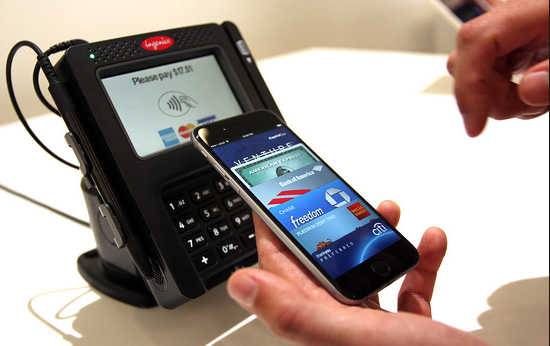
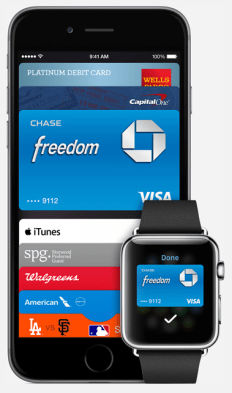 Apple Pay will be available on the iPhone 6 and Apple Watch devices for it requires technology included only in this hardware. Yes, the iPhone 6 and Apple Watch will set sales records and proliferation will be fast across the globe. However, Apple Pay will not be available on legacy devices that will slow down the adoption rate. Additionally, Apple Pay will be limited to major retailers including Whole Foods, Macy’s and Toys R Us. Yes, over 200,000 stores will be accepting contactless payments through Apple Pay. I’m sure Apple is busy negotiating partnerships with several other major retailers as well and the footprint will grow even more.
 I started off my week with a trail run and then a quick stop off at a downtown locally owned coffee joint. The coffee shop is filled with laptop toting Silicon Valley types, local Lululemon wearing trail bunnies and a myriad of salon and spa employees on their way to bill $150 for a 1-hour deep tissue massage. I stood in line and waited to pay for my overpriced cup of coffee. I’m an old school guy and paid in cash while most people paid using their debit/credit card. It seems strange to me to pay for something so cheap with plastic…but, hey, I AM old school right? However, of the 10+ payment transactions I saw, no one paid with his or her phone using the NFC feature of the payment reader. Now don’t panic…you are not the only one who has not seen the NFC technology in action. Very few merchants even have a card reader that includes NFC technology.
 Apple announced a few months back a strategic alliance with Big Blue. I provided my point of view in an
 Eric Dunstan