I spoke this week to a long time friend I made when I worked at Excite.com. Remember that early Internet portal?! Those were fun times. We share a common interest in real estate investing and in fix-flip projects. Both of us managed to work insane hours during the day and then spent weekends remodeling houses. There is a certain joy in that…but it takes its toll on the physical and mental health for sure! My parents worried that I’d never find someone and get married. I ended up marrying someone who also shares this interest in real estate.
Like many of us in the San Francisco Bay Area, my friend, Darlene, was able to cash out her Non-Qual stock options and use the proceeds to invest in real estate. She found some great opportunities in the Desert Hot Springs area and acquired several properties that she has renovated and is now renting. Score. What a great way to use her stock proceeds to generate more wealth.
Darlene shared that she recently sold two rental properties and is looking to reinvest in more properties in that area. This is where my heart sank and my ears perked up…at the same time…which is interesting from a purely biological perspective. I have a very active body it seems. My biological reaction was a cringe from the heavy taxation Darlene had to pay and the resulting loss of wealth that could have potentially been avoided.
When Darlene sold her stock options she paid short-term capital gains tax which is very common. She took those proceeds and bought properties. Now, depending how long she owned those properties, she paid capital gains taxes when she sold those properties. She will also pay income tax on the monthly rent she collected. Like wow, Scoob, that’s a lot of Scooby Snacks to give Uncle Sam. Yes, it is….and some of it can be avoided. Step into the Mystery Machine and let me tell you how.
The taxable event of selling stock is totally unavoidable and is a right of passage for success in the Silicon Valley. Paying taxes on rental income is also unavoidable. However, taxes on real estate investments can possibly be avoided…or at least deferred… through a little trick called the 1031 Exchange. The 1031 Exchange is a tool designed to help real estate investors buy “better” and more lucrative properties with the added benefit of not paying taxes on financial gains from properties sold.
Here’s how it works…and it’s totes legal. Let’s say I own 5 single-family home properties that I paid $100K each for a total investment of $500K. I hold these properties over 10 years and each has appreciated by $100K for a total gain in value of $500K. Let’s say I decided to sell all 5 properties and take the gain of $500K. Partaaaaaaay! That’s solid money. But wait, Scoob, if I take the $500K gain and run, I will pay long term capital gains tax….and that amount will hurt. Not so partaaaaaaaay!

Or, I can play this sale more strategically and use the 1031 Exchange to protect that $500K gain by buying an income property (up to 3 separate properties) of an equal or greater value…and not pay capital gains tax. Keep in mind that the purchased asset must be another investment property…and NOT a primary residence. For this example, I’d sell the 5 single-family homes and then possibly exchange them for a small apartment complex. Do this exchange several times, and there are opportunities to own big time real estate assets…and to defer having to pay capital gains.
The kicker on this type of transaction is that once the 5 properties are sold (or closed), I must identify the “better” property I want to exchange to within 45 days and close on the sale within 180 days. This can be tricky if inventory is low like in the San Francisco Bay Area. Be sure to work with a real estate agent who is well connected to other agents within your local area.
Ok…watch your step out of the Mystery Machine. There are lots of other games that can be played here that are well defined within our lovely, and I mean lovely, tax code and by the SEC. I’ll be share more in future posts….like should real estate be a part of a retirement portfolio. The short answer is, heck yeah!!!
Please leave a question or response directly on this post or Tweet me a question @ericdunstan.

 I became a
 I was reminded again this week by how red hot the residential rental market is in the San Francisco Bay Area. Over lunch with a few friends, discussions quickly turned from the quick “what are you doing now” update to rants like “I am spending so much on rent…and my landlord is going to increase it again this year!” This statement is quite common for renters in non-rent controlled areas like Palo Alto or San Jose.
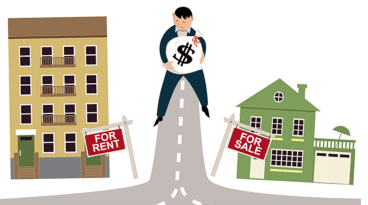 I have been asked this “should I rent or should I buy” question several times recently. I am fan of buying a home as a longer term, 5-7 year play. I reached out to a mortgage broker friend to help build the business case for home ownership taking into consideration economic factors including home appreciation, tax benefits, etc. Of course, the analysis is positioned within the context that anyone considering buying a home should consult a CPA or financial planner to understand the implications for their specific circumstances. Come on guys, you know I had to say that!!!
 Eric Dunstan