A recent study by Consult Hyperion found that over 64% of US consumers say that they would never use a mobile wallet. Additionally, consumers were asked whom they would trust most to issue a mobile wallet. The most trusted issuers were (in rank order): banks at 20%, Google at 10%, major retailers at 3% and phone service providers at 2%.
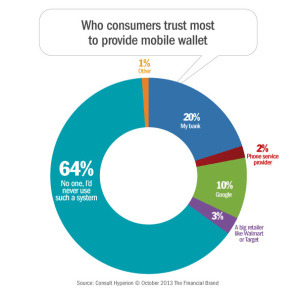
What intrigued me most was the statement of a Hyperion consultant who was offering an interpretation of the data:
“The study shows that issuers of mobile wallets need to do a better job conveying what mobile wallets really are and what benefits they bring,” says Dave Birch, a spokesperson for Consult Hyperion.
I think more effectively conveying the benefits of a mobile wallet is only a small part of the challenge. Agreed, the definition of a mobile wallet is not clear. Nodding to Eminem, will the real mobile wallet please stand up. Please stand up.
Does a mobile wallet enable P2P payments only? Or can a user apply a credit card number to make a purchase through the wallet? To make the definition even more confusing, does the mobile wallet include the myriad of loyalty cards as well? If so, does Apple’s Passbook qualify as a wallet? What about the lucky penny I carry in my wallet? Can this penny, and the luck it has, be transferred to my mobile wallet? The Leprechaun lobby will have something to say about this. They may be short, but they articulate a very clear point of view.
The biggest challenge facing increasing adoption of mobile wallets is the industry itself and the many different wallet technology providers available. At this time, the mobile wallet industry is very fragmented and no clear leader has emerged. There is no widely adopted wallet technology that a consumer can try to ease into this new payment tool. Until this happens, consumers will be afraid to engage for fear of their financial data being compromised.
A similar problem plagued consumers around the concept of buying a vehicle site unseen through the Internet. I remember a friend who I thought was just insane for buying an Acura MDX off of eBay Motors from a guy in Phoenix. eBay Motors has done a fantastic job in making the transaction process easy and safe. Now a vehicle sells every 60 seconds. The mobile wallet vertical needs a leader like eBay to emerge to break ground into mass consumer adoption. Hmmm….maybe PayPal?
Now who will this leader be? Based on the Hyperion study, it sounds like a bank could emerge as a leader. From personal experience, I know banks are very slow to innovate…so I don’t think this will happen. However, I think the provider of a mobile wallet platform that can connect to multiple banks’ online banking backend can emerge as a leader and industry standard setter. Through the right strategic partnerships this technology provider can drive adoption fast before competitors can make “me too” solutions.
As I side note, I snickered at the Hyperion study data point that 10% of responders said they would trust Google to provide a mobile wallet. Though small, this percentage I think can be accredited to brand advertising and marketing from Google. The Google wallet technology is struggling and adoption on the merchant side is very low. The power of marketing is very present in that statistic.

 Eric Dunstan